A Singapore wedding day moves fast, and it moves in chapters. From the morning gatecrash to the evening banquet, each part has its own rhythm — and its own moments worth capturing. Understanding the flow helps you plan a realistic schedule, decide how many hours of photography you actually need, and make sure nothing important gets rushed.
This is a photographer's-eye guide to a typical Singapore wedding day: what happens, roughly when, and what's worth photographing in each chapter. Planning your own day? Message us on WhatsApp and we'll help you build a timeline around your celebration.
A Singapore wedding day at a glance
Most local weddings follow a recognisable arc across the day:
- Morning preparations
- Gatecrash
- Fetching the bride
- Tea ceremony
- Solemnisation / ROM (if held the same day)
- Midday break
- Evening banquet
Not every couple includes every element, and the order can shift — but this sequence is the backbone most Singapore weddings are built on.
1. Morning preparations
The day usually starts early, with both of you getting ready in separate locations. This is the calm before everything begins — hair and makeup, slipping into the gown, quiet moments with family, and the little details (rings, shoes, invitations) that set the scene.
Worth capturing: the details, the anticipation, and the reactions of parents seeing you dressed for the first time.
2. The gatecrash
A beloved Singapore tradition: the groom and his brothers arrive at the bride's home (often an HDB flat) and must pass a series of games set by the bride's sisters before he's allowed in. It's loud, funny, and full of personality.
Worth capturing: the chaos and laughter — this is where the day's most spontaneous, candid photos happen. Timing tip: gatecrashes can overrun. Build in buffer so the games don't eat into the tea ceremony.
3. Fetching the bride
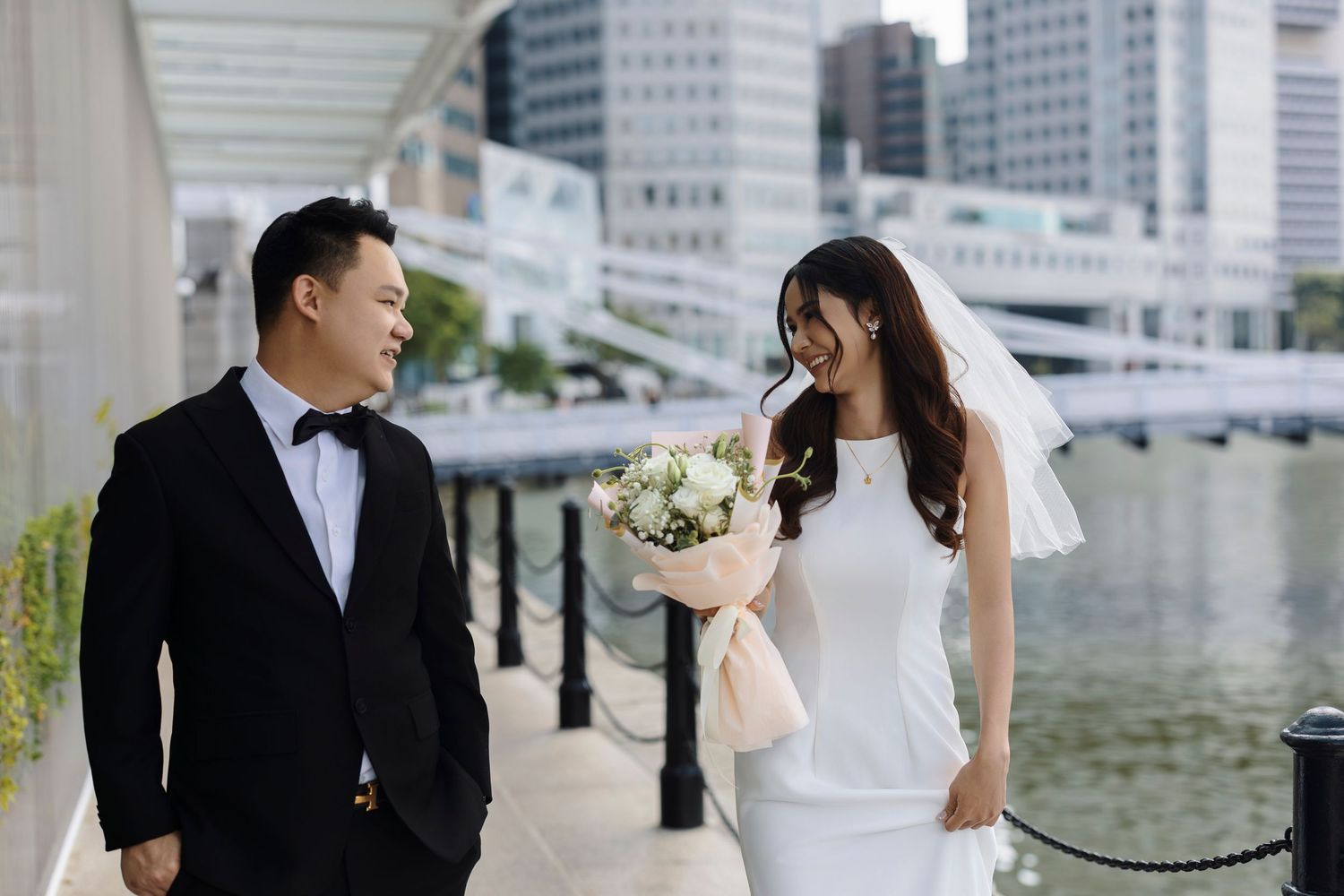
Once the groom passes the games, there's the first look and the moment he fetches his bride. Often intimate and emotional, sometimes with a quick door-to-door portrait opportunity.
Worth capturing: the first-look reaction and the couple's first quiet moment together.
4. Tea ceremony
One of the most meaningful parts of the day. The couple serves tea to parents and elders from both families, receiving blessings (and often ang bao and jewellery) in return. It's emotional, and it's culturally central.
Worth capturing: the exchanges with each family member, the blessings, and the emotion on parents' faces. Timing tip: tea ceremonies with large extended families take longer than couples expect — allow enough time.
5. Solemnisation / ROM (if same day)
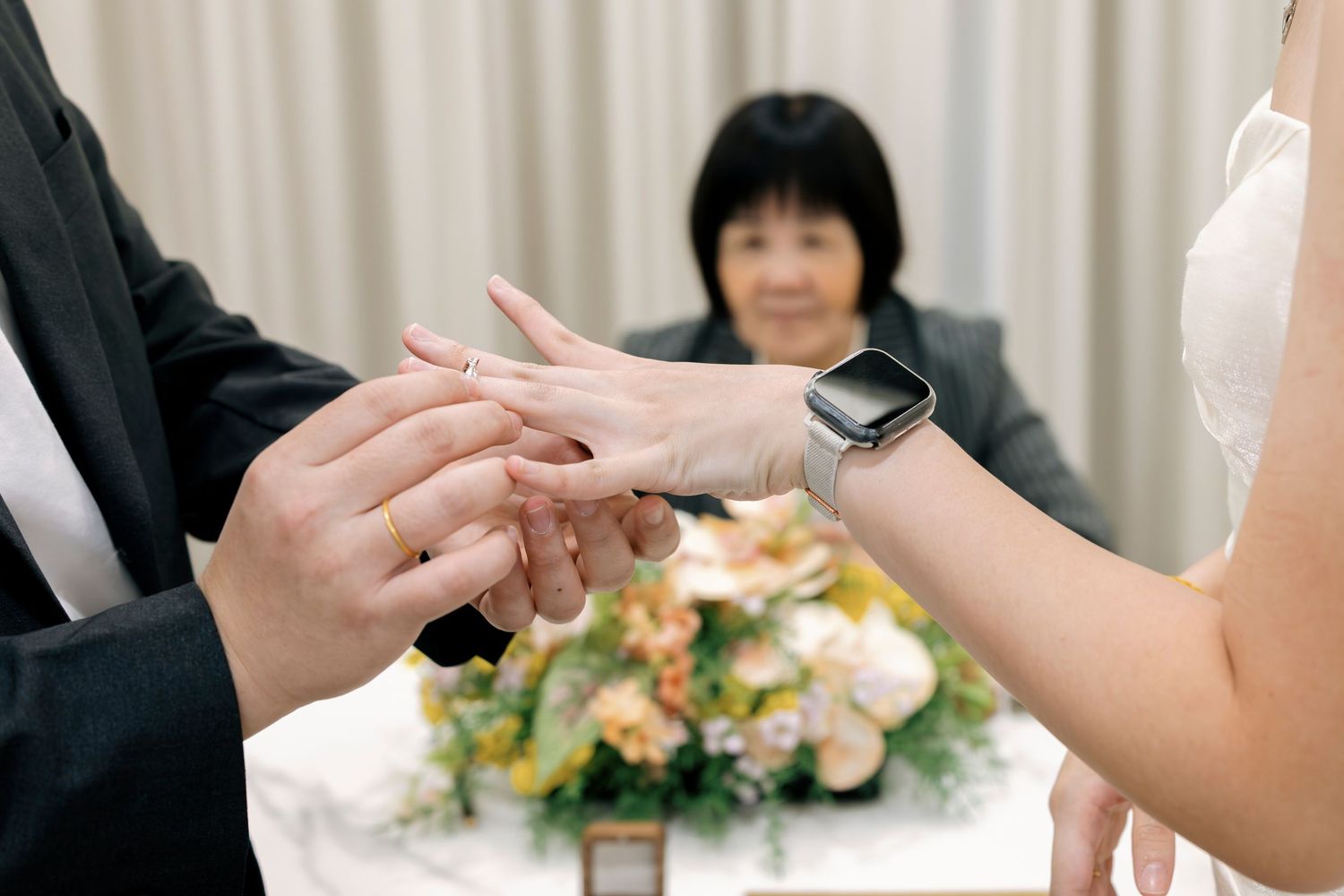
Some couples hold their legal solemnisation on the wedding day itself; others do it separately beforehand. If it's on the day, this is the legal heart of the wedding — the vows, the signing, the two witnesses. (If you're planning ROM separately, see our ROM photography guide and our guide to ROM & solemnisation venues.)
Worth capturing: the vows, the signing, and the first moments as a legally married couple.
6. Midday break
After the morning's events, there's usually a gap — a chance to rest, refresh makeup, and prepare for the evening. This is also the point where many couples switch to their evening outfits.
Timing tip: this gap is the single most under-planned part of the day. If your photographer's contracted hours run out here, they'll either switch to overtime or leave before the evening — and the in-between moments get lost. Plan coverage around this gap deliberately.
7. Evening banquet
The celebration everyone's been waiting for. A typical banquet includes the grand march-in, speeches, the first dish, toasts and the "yum seng", table visits, and often a photo montage of your pre-wedding shoot.
Worth capturing: the march-in, the speeches and reactions, the yum seng, and candid table moments. Nice to have: a photo booth (from $500) keeps guests entertained between courses and sends them home with prints, while a live band (from $600) sets the mood for the evening.
Sample Singapore wedding day timeline
Every wedding differs, but here's a realistic full-day shape:
6:30–8:30am: Preparations (both parties)
8:30–9:30am: Gatecrash
9:30–10:00am: Fetch the bride / first look
10:00–11:30am: Tea ceremony
11:30am–1:00pm: Lunch / solemnisation (if same day)
1:00–5:00pm: Break & rest
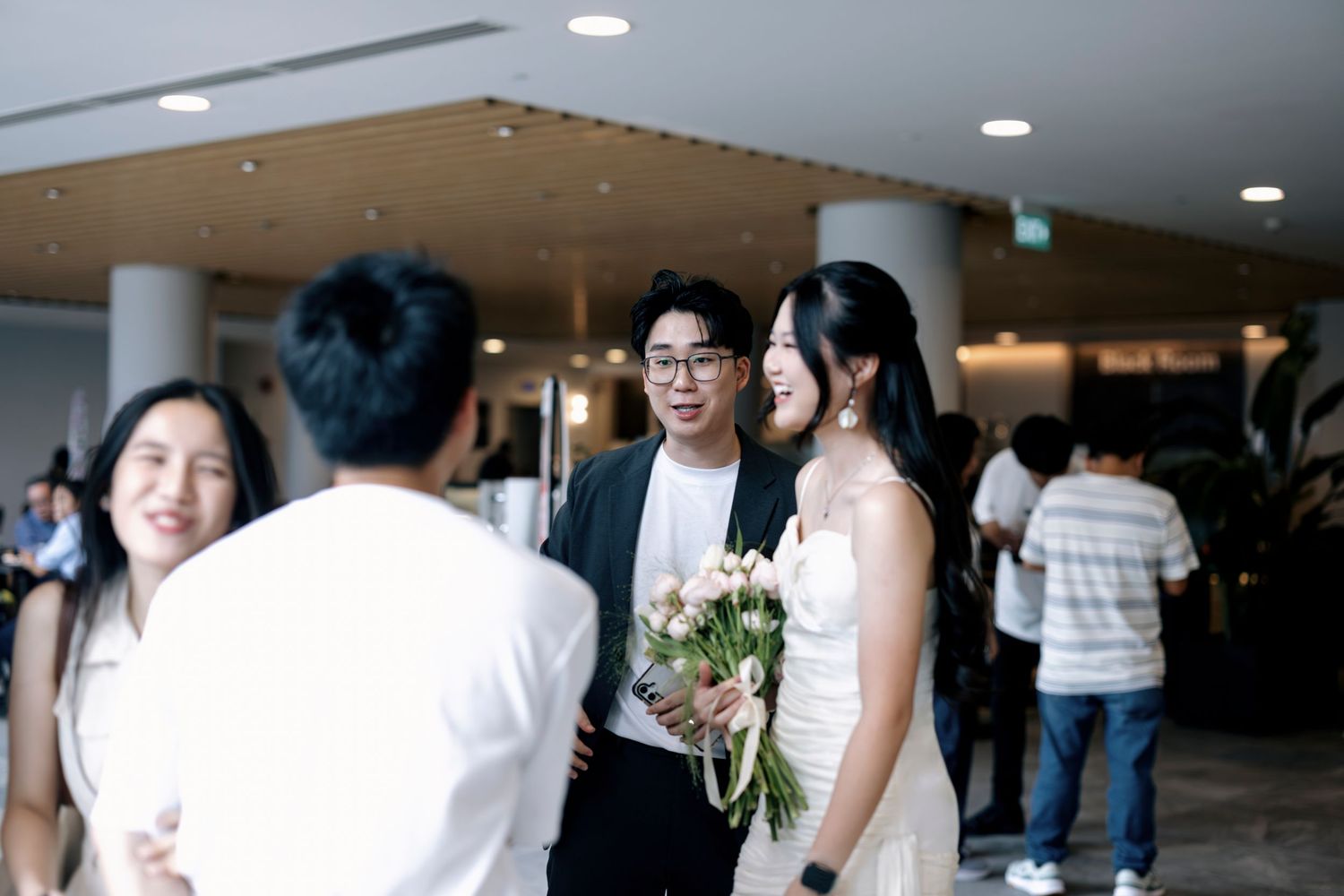
6:00–7:00pm: Guests arrive / cocktail
7:30–11:00pm: Banquet: march-in, dinner, speeches, yum seng
How much photography coverage do you need?
Because the day stretches from early morning to late evening — often with a long midday gap — many couples choose longer coverage to avoid losing the in-between moments.
As a rough guide against the timeline above:
- 6 hours covers a celebration concentrated in one block — an evening banquet, or a morning tea ceremony and lunch.
- 8 hours covers the morning and the banquet when the gap between them is short.
- 10 hours is the safest choice for a full day running from preparations through to the yum seng.
Our wedding photography packages run from $1,548 (6 hours) to $2,488 (10 hours). For the full breakdown of what's included, see our guide to actual day wedding photography in Singapore.
Frequently asked questions
How long is a typical Singapore wedding day?
=> From morning preparations to the end of the banquet, a full day often runs 12+ hours, usually with a midday break in between.
Do I need photography for the whole day?
=> It depends on your timeline. If your day spans a morning gatecrash and tea ceremony plus an evening banquet, 10 hours avoids gaps. A single-segment celebration is often well covered by 6 hours.
What's the most commonly rushed part of the day? => The gatecrash and tea ceremony often overrun. Build buffer time into the morning so nothing feels hurried.
Should I do my solemnisation on the wedding day or separately? => Both are common. Doing it separately keeps the wedding day lighter; doing it on the day keeps everything in one celebration. It's a personal choice.
Building your wedding day timeline?
Share your rough schedule and venue, and we'll help you plan coverage so nothing gets missed. Message us on WhatsApp