The morning of your wedding is the quietest part of the day — and often the most tender. Hair and makeup, your gown waiting on its hanger, your mother fastening a button, the last few minutes before everything becomes public. These are the photos couples return to most, and they're also the easiest to get wrong.
Not because they're hard to shoot, but because the room they happen in is usually cluttered, badly lit, and full of people. A little preparation changes everything. Here's what to expect and how to set yourself up. Planning your morning? Message us on WhatsApp and we'll plan coverage around it.
What gets photographed
- The details. Your gown hanging, shoes, rings, jewellery, invitation cards, perfume, and anything with meaning — a borrowed heirloom, a letter, a gift from your partner. These are usually shot first, while hair and makeup are still in progress.
- Hair and makeup. Not posed portraits, but the process: the artist working, you watching in the mirror, the small moments of concentration and laughter in between.
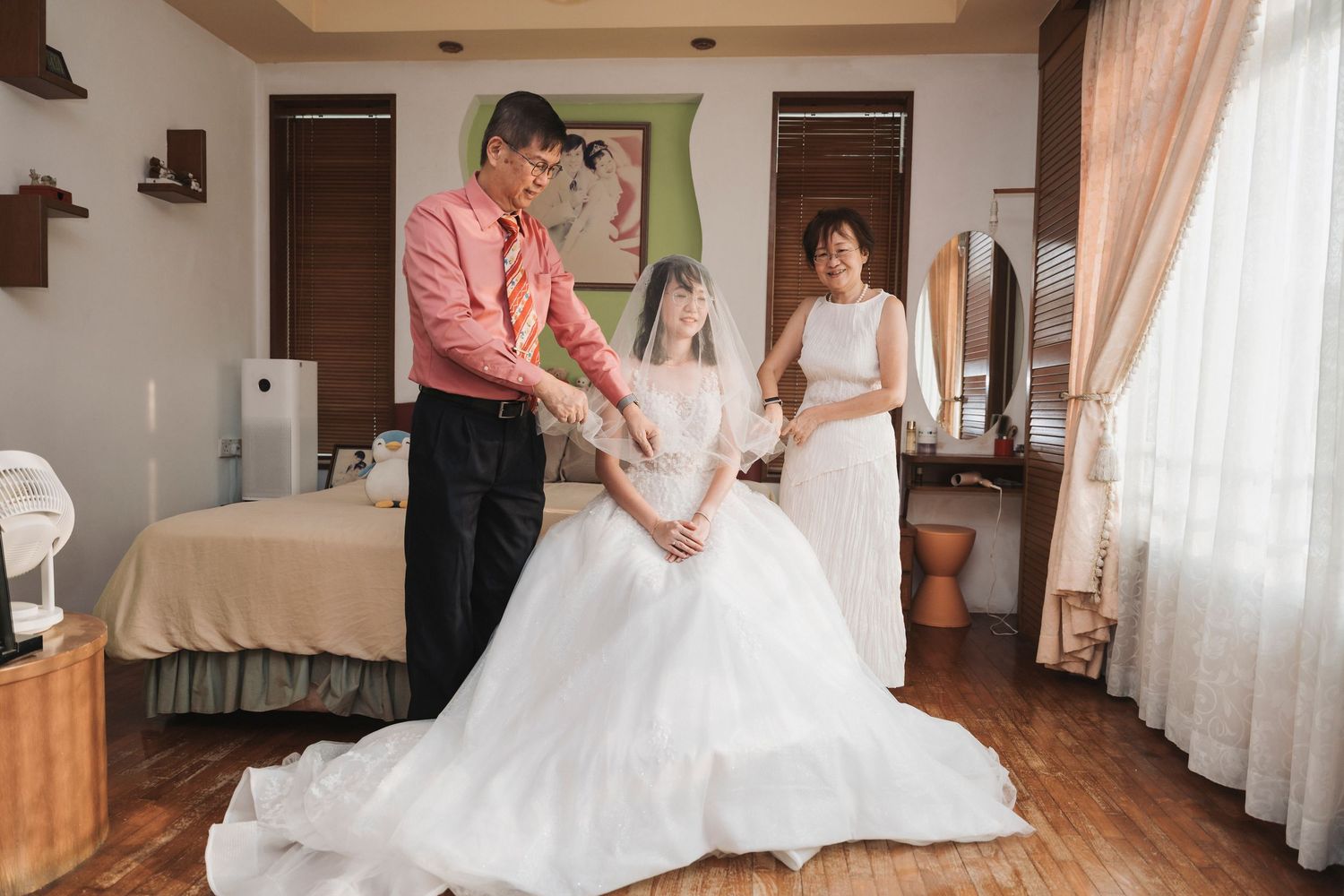
- Putting on the gown. Often with your mother, sisters, or bridesmaids helping. One of the most emotional sequences of the morning.
- Parents' reactions. Your mother or father seeing you dressed for the first time. If you want this photographed properly, plan it — tell your photographer it's coming, and give it its own moment rather than letting it happen in a crowded room.
- The quiet beat. A minute alone, dressed and ready, before you leave. Easy to lose in the rush, and worth protecting.
- The groom's side. Getting ready with his brothers, cufflinks and tie, the last check in the mirror. Often shot separately, and often overlooked entirely.
How to set up the room
This is where most of the difference is made, and it costs nothing.
- Pick the room with the best window. Natural light from a large window is far more flattering than ceiling lights or a hotel bathroom's fluorescents. Do hair and makeup facing that window if you can.
- Clear the clutter. Suitcases, shopping bags, takeaway cups, plastic wrappers — all of it ends up in frame. Designate one corner for the mess and keep the rest of the room clean.
- Turn off overhead lights where there's enough window light. Mixed lighting makes skin tones look uneven.
- Hang the gown somewhere thoughtful — a wardrobe door, a window frame, a clean wall. Not on the back of a bathroom door.
- Keep the guest count low. A small room with twelve people in it leaves no space for a photographer to move. The people who need to be there, and not many more.
HDB flat vs hotel suite
Most Singapore couples prepare in one of two places, and each has its quirks.
- At home (HDB flat) — personal, familiar, and full of family. Rooms are usually smaller and lighting tighter, so clearing space matters even more. The upside: your family is there, and those relationships are visible in the photos.
- Hotel suite — more room, usually better light, and a clean backdrop. Many couples who book a hotel banquet also book the suite for the morning. The upside is space; the downside is it looks like any other hotel room unless you bring personal details into frame.
Neither is better. Just tell your photographer which one you're in, so they arrive knowing the space.
Timing
Preparation usually runs two to three hours, depending on hair and makeup, and it's the easiest part of the day to underestimate.
A few timing notes:
- Photographers usually arrive during the final stretch of hair and makeup — not at the start — so they capture the finished look and the gown going on.
- Build buffer before the gatecrash. If prep runs late, the entire morning compresses, and the gatecrash and tea ceremony get rushed. See our Singapore wedding day timeline.
- Have the details ready before your photographer arrives. Rings, shoes, invitations, and jewellery gathered in one place saves fifteen minutes of hunting.
The night before: a short checklist
- Gather all detail items in one box — rings, invitations, jewellery, perfume, shoes
- Steam or press the gown and hang it somewhere clean
- Decide which room has the best window light
- Clear the clutter and assign a "mess corner"
- Confirm arrival times with your hair and makeup artist and photographer
- Charge phones and set out anything you'll need
- Eat breakfast. Seriously — it's a long day and it shows on faces
Does preparation coverage need extra hours?
It can. Morning preparation, gatecrash, tea ceremony, and an evening banquet is a long day, and coverage that starts late will miss the quiet part entirely.
Our wedding photography packages run from $1,548 (6 hours) to $2,488 (10 hours). If you want the morning covered and the banquet, the longer options are usually the safer choice — see our actual day wedding photography guide and the full wedding day shot list.
Frequently asked questions
- What time should my photographer arrive on the wedding morning? => Usually during the final stretch of hair and makeup, so they capture the finished look, the details, and the gown going on — rather than the first hour of prep.
- How long does wedding morning preparation take? => Typically two to three hours, depending on hair and makeup. It's the part of the day couples most often underestimate.
- How do I get better getting-ready photos? => Choose the room with the best window light, clear the clutter, keep the guest count low, and have all your detail items gathered in one place beforehand.
- Should the groom's preparation be photographed too? => It often is, and it's frequently overlooked. If you want it covered, mention it when planning — it may affect timing if you're getting ready in separate locations.
Planning your wedding morning?
Tell us where you're getting ready and your timeline, and we'll plan coverage so the quiet moments aren't missed. Message us on WhatsApp