Of all the moments on a Singapore wedding day, the tea ceremony is often the most emotional. It's when the couple formally honours their parents and elders, receives their blessings, and two families become one. It's intimate, meaningful, and — because it moves quickly — one of the most important parts of the day to photograph well.
This guide explains what the Chinese wedding tea ceremony involves, how it flows, what you'll need, and the moments worth capturing. Planning your day? Message us on WhatsApp and we'll help you plan the coverage.
What is the tea ceremony?
The tea ceremony (敬茶) is a gesture of respect and gratitude. The couple serves tea to their parents, grandparents, and elder relatives, who in return offer their blessings — and often a red packet (ang bao) or a piece of jewellery to welcome the new family member.
More than a ritual, it's the moment the couple thanks the people who raised them, and the two families are formally joined. It carries real emotional weight, which is exactly why it photographs so beautifully.
When does it happen?
The tea ceremony traditionally takes place on the wedding morning, after the groom has fetched the bride. Depending on family arrangements, there may be two ceremonies — one at the groom's family home and one at the bride's — or a single combined ceremony. Confirm the plan with both families early, as it shapes your morning timeline. (See our Singapore wedding day timeline for how it fits into the day.)
The order of serving
Tea is served by seniority, so it helps to prepare a name list in advance. The general order:
- Grandparents (if present) — the most senior first
- Parents
- Elder uncles and aunts
- Elder married siblings and cousins
The couple typically serves tea with both hands, addressing each elder by their proper title (a name list keeps this smooth), and may kneel or bow as a sign of respect. After sipping, the elder offers blessings and the ang bao or jewellery.
What you'll need
- A tea set (teapot and small cups)
- Kneeling cushions (often red)
- Tea, sometimes brewed with red dates, lotus seeds, or longan — symbols of sweetness and a fruitful marriage
- A name and order list so the couple knows whom to serve, and when
- Ang bao or jewellery from elders (handled by the families)
What to photograph
Because the ceremony is intimate and fast, planning the shots matters. The moments worth capturing:
- The couple serving tea to each elder, both hands extended
- The elders receiving the tea and offering blessings
- The giving of ang bao or jewellery — often the most touching exchange
- Reactions and emotion on parents' and grandparents' faces
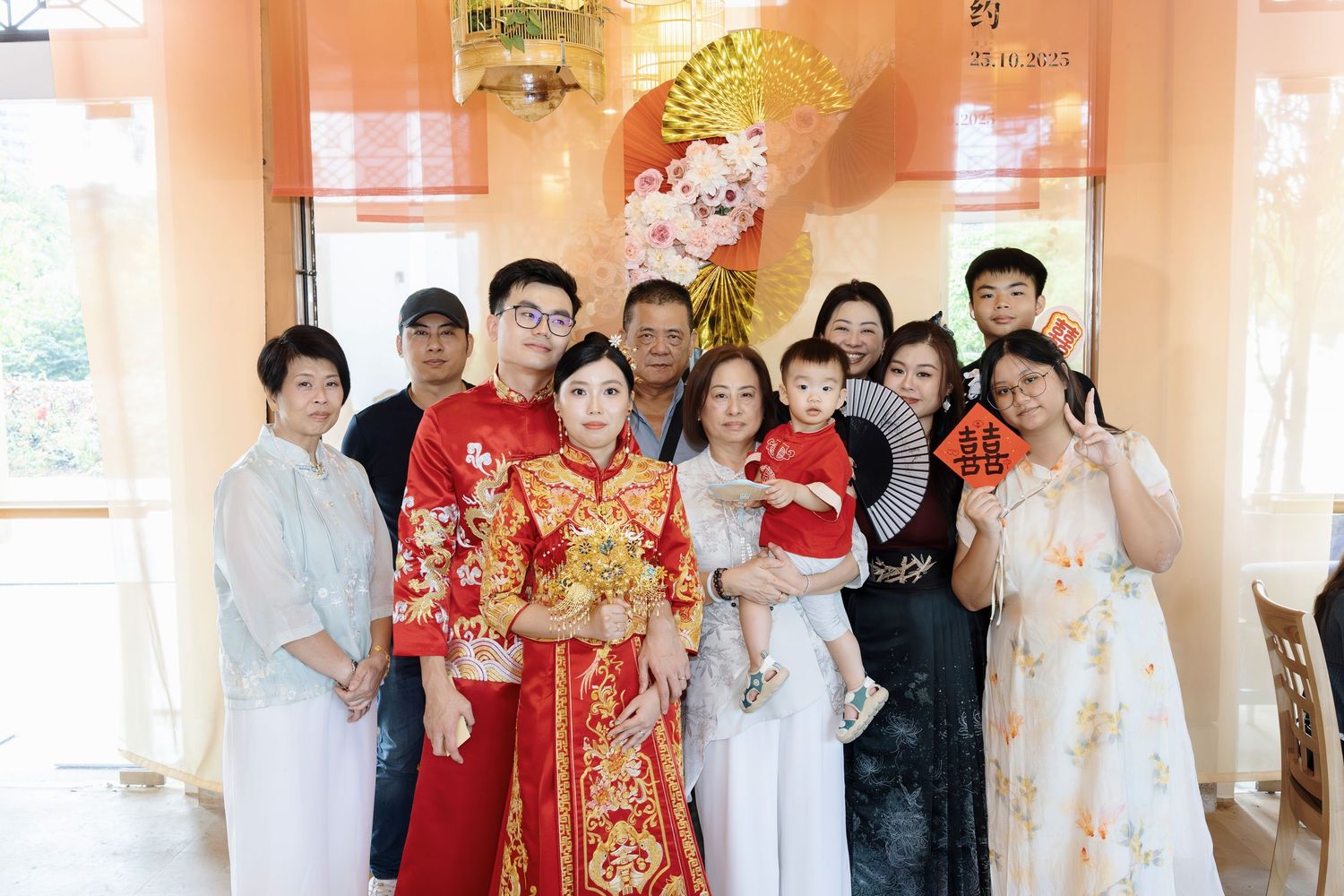
- Group photos with each side of the family afterwards
A photographer who knows the order can position themselves for each exchange without asking anyone to repeat it — which is why briefing them on your family's plan beforehand makes a real difference.
Tips for a smooth ceremony
- Prepare the serving order in writing and share it with your photographer.
- Allow enough time — large extended families take longer than couples expect.
- Keep the space uncluttered so there's room for photos of each exchange.
- Brief your photographer on whether there are one or two ceremonies, and where.
Frequently asked questions
- What is the meaning of the Chinese wedding tea ceremony? => It's a gesture of respect and gratitude — the couple serves tea to parents and elders, who offer blessings and often a red packet or jewellery in return, formally joining the two families.
- What order do you serve tea in? => By seniority: grandparents first, then parents, then elder uncles and aunts, then elder married siblings and cousins — on each side of the family.
- When does the tea ceremony take place? => Usually on the wedding morning after the bride is fetched. There may be one combined ceremony or separate ceremonies at each family's home.
- What are the key moments to photograph? => The serving of tea, the elders offering blessings, the giving of ang bao or jewellery, and the emotion on family members' faces.
Planning your wedding day?
Share your morning schedule and family plans, and we'll help you capture the tea ceremony beautifully. Message us on WhatsApp