
The night before the wedding is usually spent finishing last-minute errands and trying to sleep early. For many Chinese Singaporean families, it also holds one of the most personal customs of the whole wedding: the hair combing ceremony, or shang tou (上头).
It's short, private and held at home, often with only parents present. That's exactly why couples who mark it tend to treasure the photos. This guide covers what happens, what you need, the four blessings, and how to photograph it well. Planning your wedding? Message us on WhatsApp and we'll help you plan the photos.
What is the hair combing ceremony?
The hair combing ceremony marks the bride's and groom's transition into adulthood and married life. A parent, or a woman regarded as blessed with good fortune, combs the hair four times while reciting a blessing with each stroke.
Both the bride and the groom take part, each at their own family home. If one of you holds the ceremony, the other traditionally does too.
When is it held?
It usually takes place on the night before the wedding, at an auspicious hour chosen for the couple. Timing varies by dialect group and family. Some hold both ceremonies at the same time, often around midnight. Others start the bride's ceremony after the groom's, or hold it early on the wedding morning instead.
Check the timing with your elders early, especially if it falls late at night. It affects how much sleep you get before a long wedding day.
Who performs it?
Traditionally, one or both parents comb the hair. If they're unable to, families often invite a woman considered fortunate: happily married, with her husband, children and grandchildren all living. Many families simply ask a mother, grandmother or favourite aunt.
What you need
Exact items vary by family, but a typical set includes:
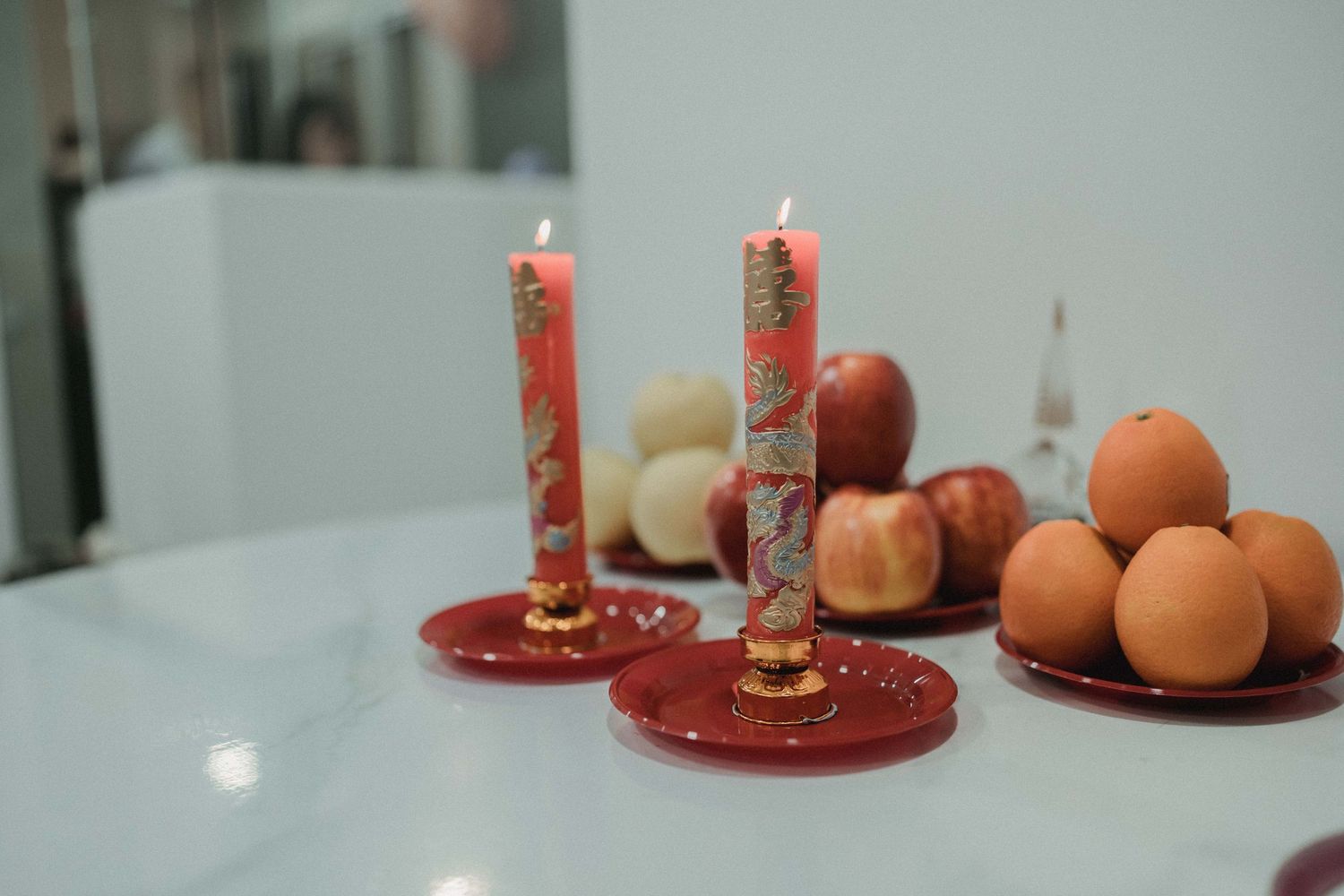
- A pair of dragon and phoenix candles, lit during the ceremony
- A new comb — often a round comb for the bride and a pointed comb for the groom
- A mirror, red string and a ruler, with a sewing kit added for the bride
- Thuja leaves
- A plate of lotus seeds, red dates and dried longans
- A bowl of glutinous rice balls (tang yuan) to eat afterwards
Before the ceremony, the bride and groom traditionally bathe in water infused with pomelo or pomegranate leaves, then change into new pyjamas and slippers. They sit at a table facing an open window.
Many couples buy a ready-made hair combing set from a wedding shop, which saves hunting down each item.
The four blessings
The hair is combed four times, with a blessing for each stroke. Wording varies by family and dialect, but the meanings are broadly:
- A marriage that lasts a lifetime
- A happy, harmonious marriage into old age
- Many children and grandchildren
- Long life
Afterwards, the couple eat a bowl of tang yuan. The round rice balls symbolise togetherness and a complete, harmonious marriage.
What to photograph
The whole ceremony may take only 15 to 20 minutes, so the moments are concentrated:
- The set-up. Candles, comb, mirror and the plate of dried fruits arranged on the table. It's a lovely still life and sets the scene for the whole gallery.
- The comb in the parent's hand. Close-ups of the four strokes, and the parent's expression as they say each blessing.
- The reflection. The mirror and the open window give natural frames for a quiet portrait.
- The family watching. Siblings and grandparents in the doorway are often the most candid photos of the night.
- Tang yuan. A small, warm ending that's easy to miss.
Photographing at night, at home
Most hair combing ceremonies happen late in the evening, in a bedroom or living room. A few simple things help:
- Use warm lamps, not ceiling lights. Candlelight plus a soft table lamp looks far better than overhead fluorescent light.
- Clear the background. Move laundry, bags and clutter out of the corner where you'll sit.
- Keep it small. The ceremony is intimate. One photographer, quietly in the background, keeps it that way.
- Agree the start time. At a late hour, a 15-minute delay matters to everyone's sleep.
Should you photograph your hair combing ceremony?
If the custom matters to your family, yes. It's one of the few times the night before the wedding gets captured at all, and the photos of a parent combing their child's hair often mean more to them years later than anything from the banquet.
If you'd like it photographed, mention it when you plan your wedding coverage so it can be planned together with the day itself. The wedding day, from morning preparations and the gatecrash to the tea ceremony and banquet, is covered by our actual day wedding photography in Singapore, with packages from $1,548 (6 hours) to $2,488 (10 hours).
Where it fits in the wedding customs
The hair combing ceremony is one of several Chinese wedding customs couples in Singapore may follow:
- Guo Da Li — the betrothal ceremony, two to four weeks before. See our Guo Da Li guide.
- Bed setting (An Chuang) — a few days to a week before.
- Hair combing — the night before.
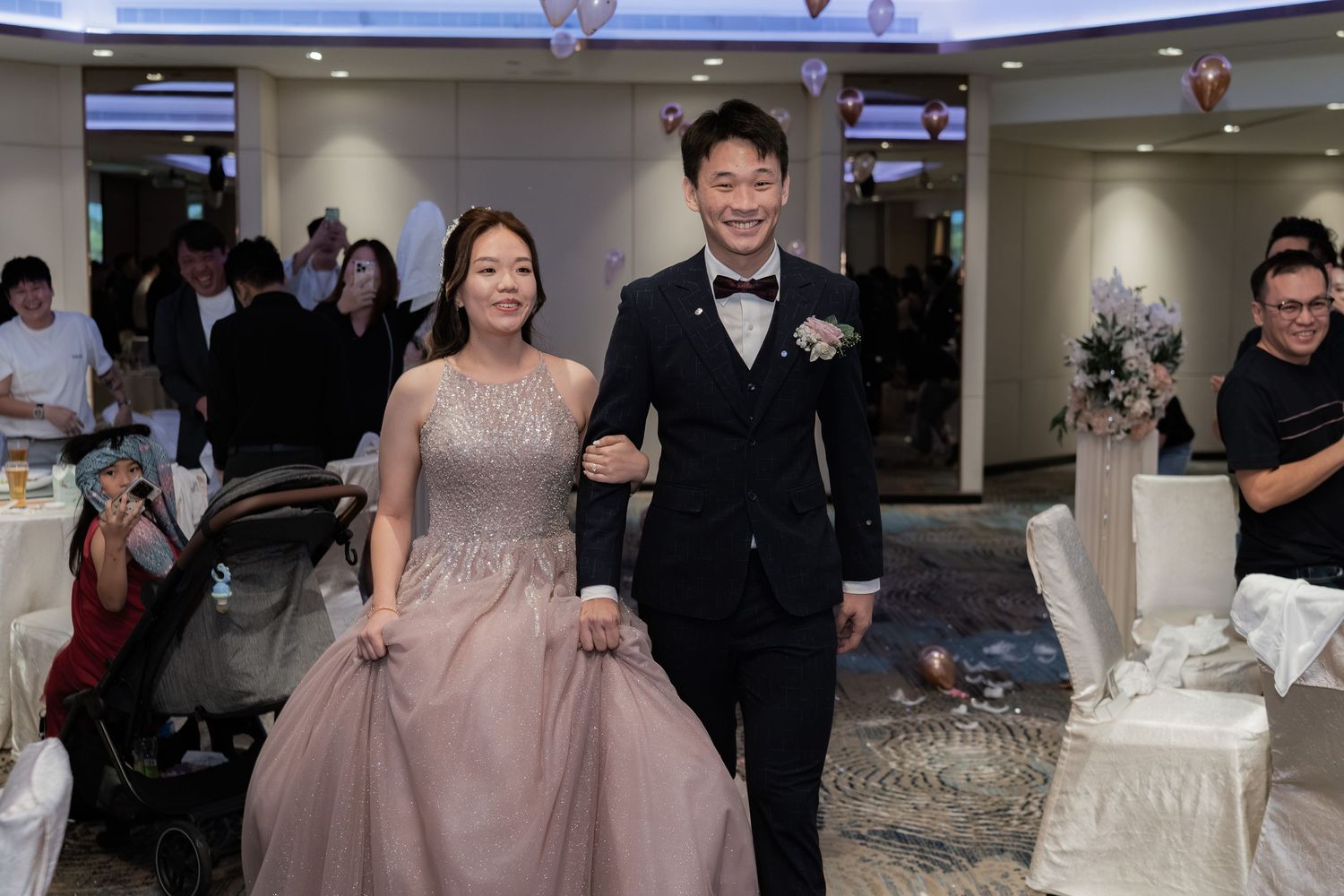
- The wedding day — preparations, gatecrash, the tea ceremony, and the banquet.
For how the wedding morning flows, see our guide to wedding morning preparation photos.
Frequently asked questions
- What is the hair combing ceremony? => It's a Chinese wedding custom, also called shang tou, in which a parent or a woman of good fortune combs the bride's and groom's hair four times with a blessing for each stroke, marking their step into married life.
- When is the hair combing ceremony held? => Usually the night before the wedding, at an auspicious hour. Some families hold it at midnight; others hold the bride's after the groom's, or on the wedding morning.
- What items are needed for the hair combing ceremony? => Typically dragon and phoenix candles, a new comb, a mirror, red string, a ruler, thuja leaves, a plate of lotus seeds, red dates and longans, and tang yuan to eat afterwards.
- What are the four blessings? => A lifelong marriage, a harmonious marriage into old age, many children and grandchildren, and long life. Exact wording varies by family.
- Does the groom need to do the hair combing ceremony? => Traditionally, yes. If the bride holds the ceremony, the groom holds his own at his family home.
- Can the hair combing ceremony be photographed? => Yes. It's short and intimate, so one photographer working quietly with warm lamplight captures it best.
Planning your wedding photography?
Tell us which customs your family is keeping, and we'll help you plan the photos around them. Message us on WhatsApp